Spare Parts Planning for Grain Processing Plants
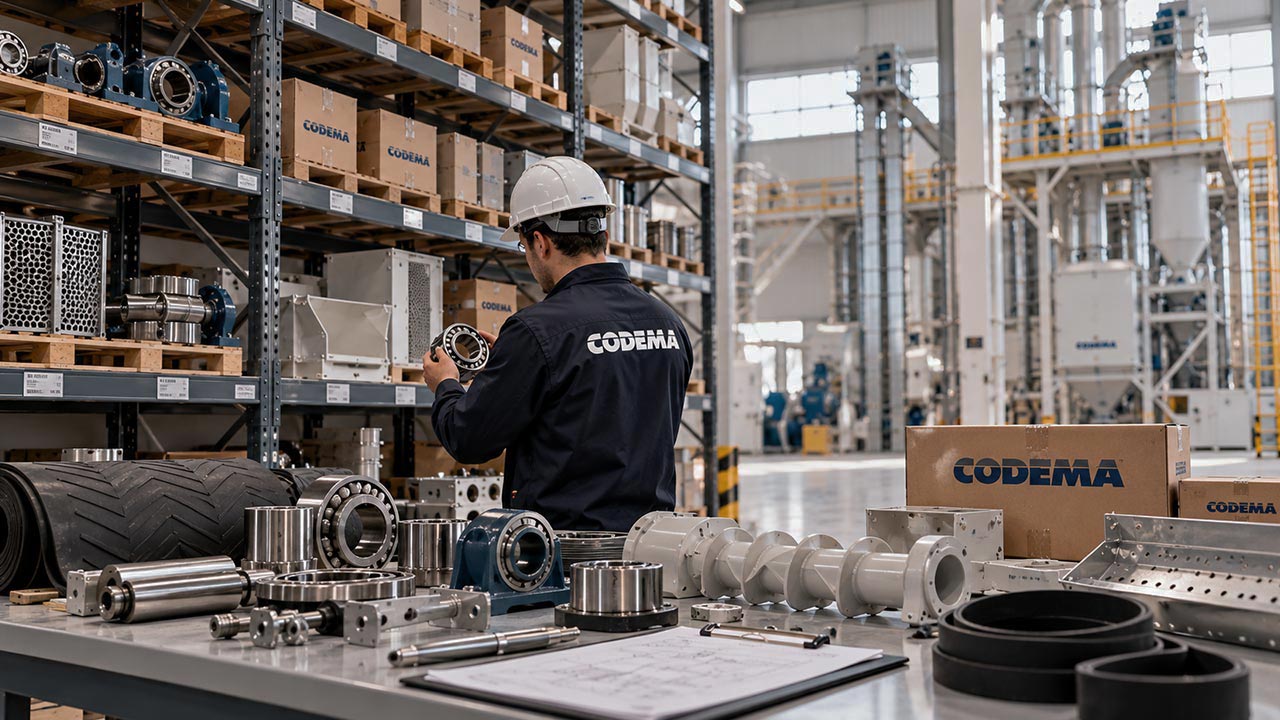
A spare parts strategy helps a grain processing plant prepare for routine wear and unexpected equipment issues. Keeping every possible component in stock may be impractical, while relying entirely on urgent purchasing can expose operations to avoidable delays. A useful approach is to understand which components matter most to production, how they are identified, and how replacement decisions are made.
Identify critical equipment and components
Start with the equipment whose failure would have the greatest operational impact. This may include key transfer equipment, elevators, process machines, or packaging line components, depending on the facility. Consider the consequences of a failure, whether an alternative route exists, the frequency of use, and the time needed to obtain a replacement. Criticality should be based on the plant’s actual process rather than a generic list of parts.
Keep equipment information accurate
Part numbers, equipment models, drawings, photographs, installation records, and supplier details make it easier to identify the correct component. Inaccurate or incomplete records can lead to ordering delays or mismatched parts. When equipment has been modified, records should be updated so that the documented configuration reflects the installed system. A clear request process also helps maintenance teams provide the information needed for technical review.
Balance stockholding with lead time
The decision to stock a component depends on its criticality, expected wear, availability, storage conditions, and procurement lead time. Frequently used or difficult-to-source items may need a different approach from standard components that are readily available. The goal is not to maximize inventory, but to balance readiness with cost and practical storage limits. These decisions are best reviewed alongside the maintenance plan and the facility’s operating priorities.
Connect spare parts planning with preventive maintenance
Inspection and maintenance records can reveal recurring wear patterns and help teams anticipate future needs. When a component is replaced, recording the reason and the equipment condition can improve later decisions. Maintenance planning should also consider access, safe isolation, and the practical steps required to replace the part. These records help the plant move from reactive purchasing toward a more structured process.
Conclusion
A practical spare parts strategy combines equipment criticality, accurate records, realistic lead-time planning, and maintenance history. It helps teams make better-informed decisions without assuming that every facility needs the same inventory. Codema provides spare parts solutions for grain processing, milling, material handling, and packaging systems. Related material handling solutions and a direct discussion with Codema can help clarify requirements for a specific installation.
