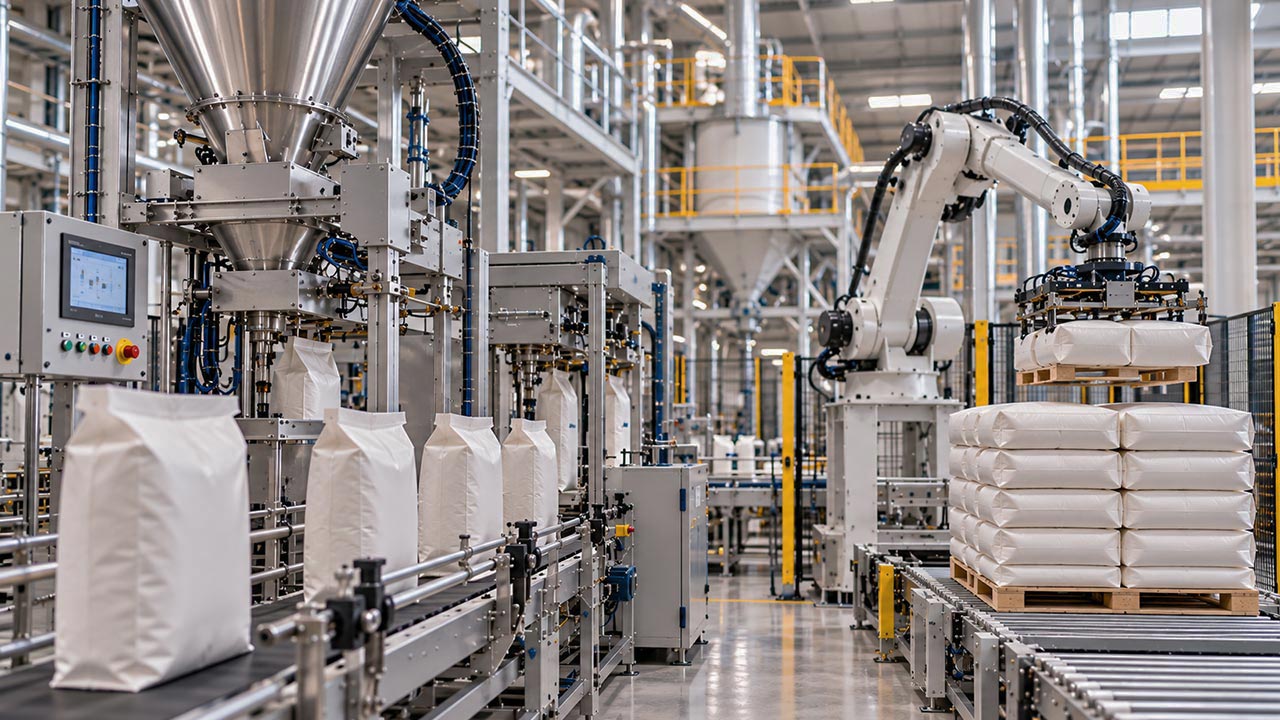
Reducing Packaging Bottlenecks from Weighing to Palletizing
Packaging line performance depends on the combined output of several stages. Weighing, bag filling, bag closing, conveying, palletizing, and wrapping each have different operating requirements. When one stage repeatedly pauses or cannot accept the output of the previous stage, the entire line can lose continuity. The most effective improvement usually begins with identifying where and why the interruption occurs.
Observe the line before changing equipment
Track the sequence of events around each stop. Does product wait before weighing? Are bags consistently available? Does the bagging machine pause while downstream conveyors clear? Does palletizing fall behind during a particular package format? Observations should cover normal production as well as changeovers and product variations. This creates a more reliable picture than judging performance from a single short period.
Compare the capacity of connected stages
The rated capacity of an individual machine does not guarantee that the full line can sustain the same output. The upstream feed pattern, bag placement, product characteristics, discharge timing, and downstream handling all affect performance. Conveyors and accumulation points should be considered in relation to the way the equipment actually runs. A system-level review helps distinguish a true capacity constraint from a synchronization or layout problem.
Review product and package changes
Different product properties and package formats may require different settings or handling procedures. Frequent changeovers can introduce repeated setup time, while unclear procedures can make performance inconsistent between shifts. Review which formats are most common, how changes are managed, and whether operators have appropriate access to make adjustments safely. Improvements should fit the actual product mix rather than a single ideal condition.
Consider maintenance and integration
Worn components, unreliable sensors, and poorly coordinated interfaces can contribute to interruptions. Maintenance history should be reviewed alongside observations of the operating line. If a modification is planned, consider how weighing, bagging, conveying, palletizing, and wrapping communicate and exchange product. Codema’s packaging solutions include equipment and systems selected to suit product characteristics, throughput needs, and facility layout.
Conclusion
Packaging bottlenecks are easier to address when the line is treated as a connected process. Observe stoppages, compare stage capacities, review changeovers, and check maintenance and system interfaces before deciding what to change. Explore Codema’s packaging solutions, learn about Italpack packaging systems, and consider spare parts solutions when component availability or replacement planning is part of the issue.
