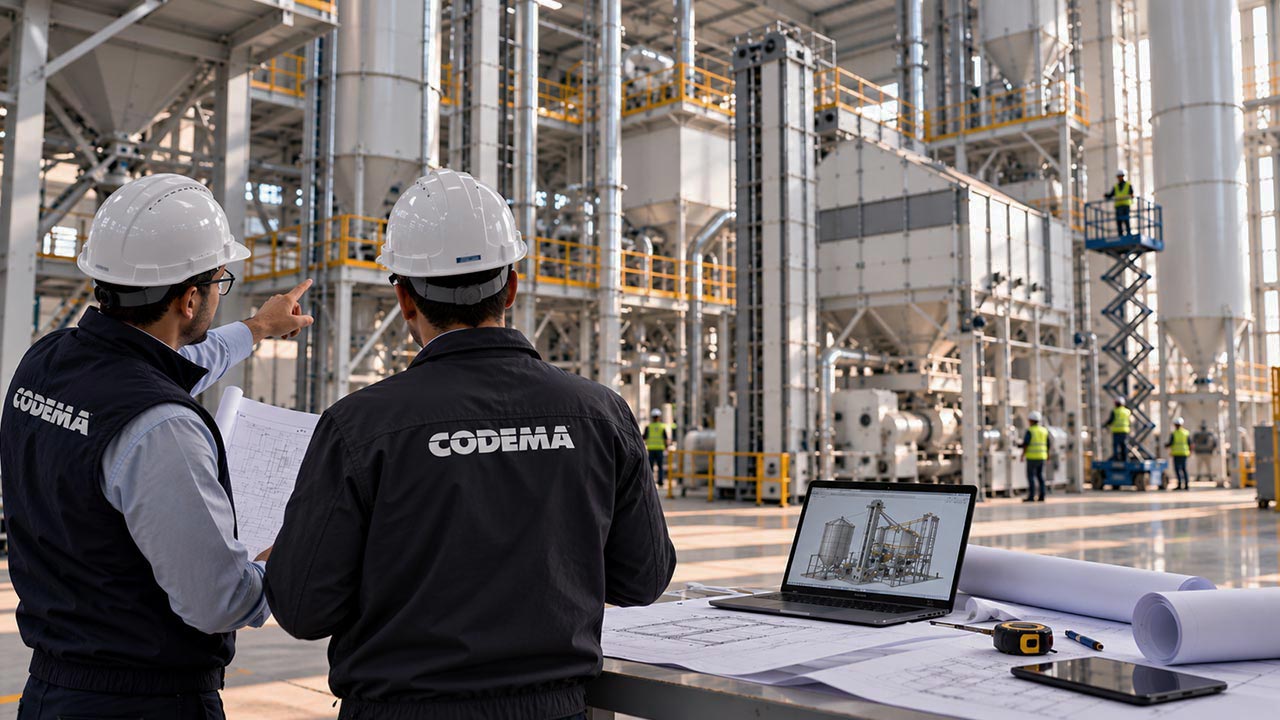
Planning a Grain Processing Plant Upgrade
Upgrading an existing grain processing plant is different from designing a facility from the ground up. The current building, installed equipment, operating routines, and production schedule all shape what is practical. An upgrade may focus on one machine, a transfer route, a storage interface, or a broader process improvement. Whatever the scope, the change should be evaluated in relation to the full system.
Set a clear operational objective
Begin by describing the issue the project is intended to address. Examples may include recurring interruptions, difficult maintenance access, a process stage that limits the line, or a need to accommodate a different operating requirement. A clear objective helps the team compare options and assess whether a proposed change addresses the actual problem. Avoid defining success only as replacing old equipment with a newer model.
Verify the current installation
Existing drawings and equipment lists are useful, but they may not reflect every modification made during the plant’s operating life. Verify critical dimensions, connection points, available space, access routes, and the condition of connected equipment. Review how the process behaves during typical production and identify dependencies that could be affected by the change. This reduces the risk of designing around assumptions that no longer match the site.
Look beyond the equipment being replaced
A machine may be the visible source of a problem while the underlying constraint lies in its feed, discharge, controls, or connected process. For example, a new conveyor will not resolve a downstream capacity issue by itself. Review material flow, storage interfaces, operator access, and maintenance requirements across the affected section of the plant. This is especially important where several equipment generations must work together.
Plan the work around plant operations
Installation timing, access, isolation, lifting requirements, and the sequence of work can affect the disruption caused by an upgrade. The project team should identify what needs to be prepared in advance and how the modified system will be checked before normal operation resumes. The exact method depends on the equipment and site; the important point is to consider implementation as part of the project design, not as a final administrative step.
Conclusion
A well-planned grain processing upgrade begins with a defined operational objective and a verified view of the existing installation. Reviewing interfaces, material flow, access, maintenance, and installation constraints helps ensure that the change supports the plant rather than shifting the bottleneck elsewhere. Learn about Codema’s engineering expertise, explore material handling systems, and review spare parts solutions as part of a wider equipment lifecycle approach.
