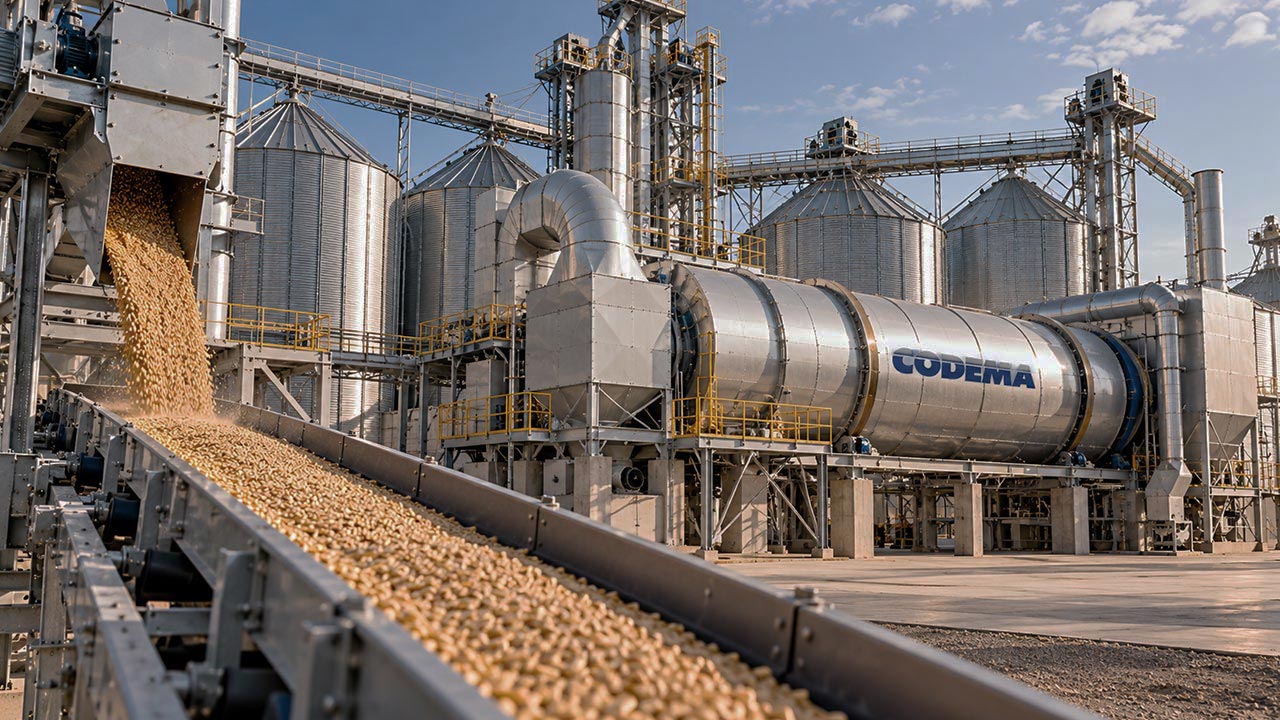
Grain Moisture Management and Drying Planning
Moisture management is an important part of handling and preparing grain for storage or further processing. The appropriate drying approach depends on the grain, its incoming condition, the intended use, and the operating requirements of the facility. Drying should not be treated as an isolated machine choice: receiving, conveying, storage, monitoring, and downstream processing all affect how the system needs to operate. Codema supplies industrial drying systems as part of that wider process.
Understand the incoming grain
Before selecting or adjusting a drying process, operators need a clear picture of the incoming material. Moisture content can vary between deliveries, and the expected range influences process planning. Grain type, temperature, throughput requirements, and the quality specifications for the intended application also matter. The operating target should be determined using the relevant product and process requirements rather than a universal figure applied to every grain type.
Balance moisture reduction with product requirements
The objective is not simply to remove moisture as quickly as possible. The process must be appropriate for the grain and the quality requirements of its next use. Drying conditions, residence time, airflow, and the way grain moves through the system should be evaluated as part of the equipment and process design. Any operating parameters should be established for the specific application and validated by qualified personnel.
Coordinate drying with conveying and storage
The drying system depends on the equipment that feeds it and receives the product afterward. Intake capacity, conveying routes, buffers, storage capacity, and the availability of downstream operations can all affect continuity. If the surrounding system cannot maintain a suitable flow, the drying stage may be underused or become a constraint. A coordinated layout helps align the movement of material with the process requirements.
Plan monitoring and maintenance
Consistent operation relies on suitable monitoring, inspection, and maintenance practices. Teams should understand which conditions need to be checked, how changes in incoming material are handled, and what procedures apply when the process moves outside expected limits. Equipment access and the ability to inspect connected handling components should be included in facility planning.
Conclusion
Grain drying decisions should reflect the material, quality requirements, operating conditions, and the rest of the facility. By considering incoming moisture, process targets, material flow, storage, and monitoring together, operators can make more informed planning decisions. Codema’s experience in grain processing and material handling systems, along with its network of processing technology partners such as Super Brix, provides relevant context for discussing integrated facility requirements.
