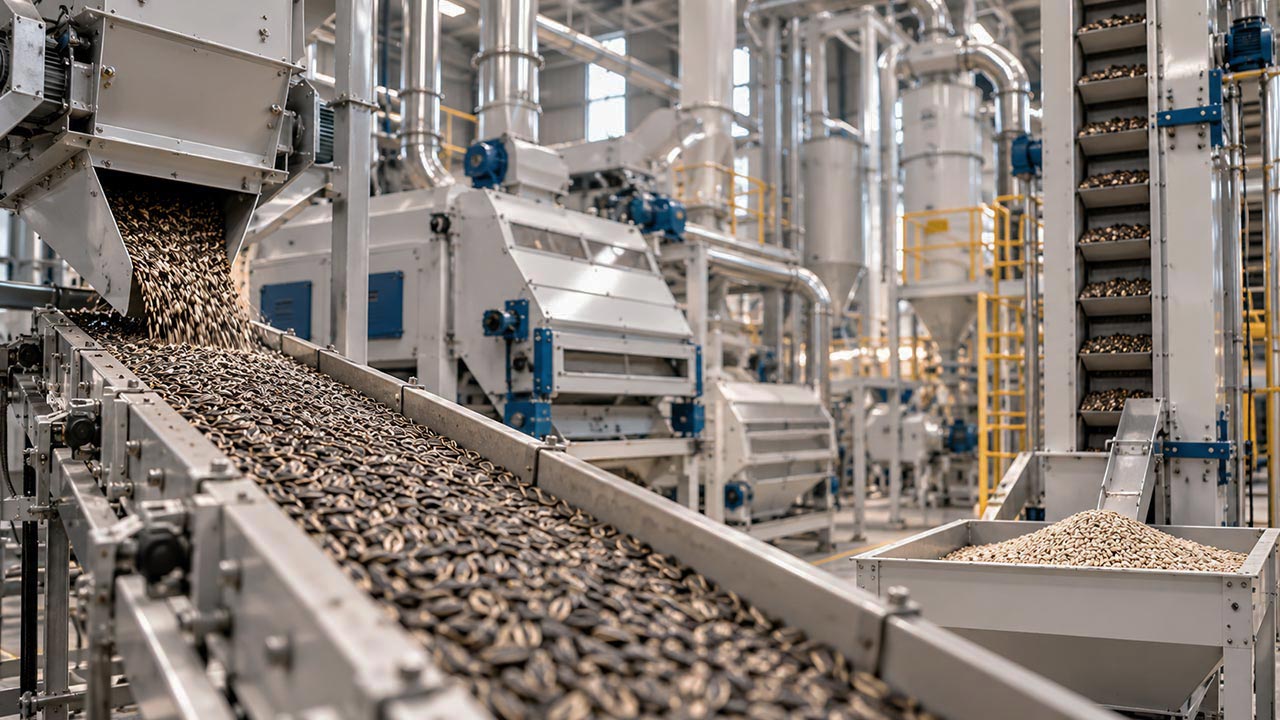
Key Stages in Oilseed Preparation
Oilseed processing begins well before the main extraction or downstream production stage. Preparation helps create more consistent feed conditions and supports the requirements of the process that follows. The appropriate sequence depends on the seed, its condition, the intended end product, and the design of the overall facility. For this reason, oilseed preparation should be considered as a connected process rather than a fixed list of machines that applies to every plant.
Cleaning: prepare a more consistent feed
Incoming seed may contain dust, plant material, stones, or other unwanted material. Cleaning equipment is selected according to the characteristics of the incoming product and the quality requirements of the process. The aim is to manage impurities before they create difficulties in later stages or affect equipment operation. The required cleaning arrangement should be based on the actual raw material and the operating conditions expected at the facility.
Dehulling: match the approach to the seed
Dehulling can be important in applications where the seed’s outer covering affects the next processing stage or the properties of the final product. The method and equipment depend on the seed type and the required degree of separation. Sunflower, soybean, and rapeseed do not have identical processing characteristics, so a design that works for one application should not automatically be assumed suitable for another. Process objectives and product requirements should guide the selection.
Conditioning and process consistency
Conditioning adjusts the material to suit the requirements of the next stage. The appropriate conditions depend on the seed, the process route, and the equipment used downstream. Consistency matters because variations in feed characteristics can influence the behavior of later operations. Process planning should therefore consider how cleaning, dehulling, conditioning, storage, and conveying interact rather than optimizing each stage independently.
Integrate preparation with the wider facility
Preparation equipment needs reliable feed and discharge arrangements, suitable storage interfaces, and a layout that supports operation and maintenance. A bottleneck in conveying or an inconsistent supply to a process stage can undermine the value of otherwise suitable equipment. Engineering review should consider the complete material path and the practical requirements of the site. Codema provides oilseed processing solutions for applications involving seeds such as sunflower, soybean, and rapeseed.
Conclusion
Oilseed preparation is shaped by the raw material, product objectives, and the process that follows. Cleaning, dehulling, conditioning, and material transfer should be evaluated together to create a practical and consistent process route. Explore Codema’s oilseed processing solutions, learn about the company’s Super Brix processing partnership, or contact Codema to discuss an application-specific requirement.
