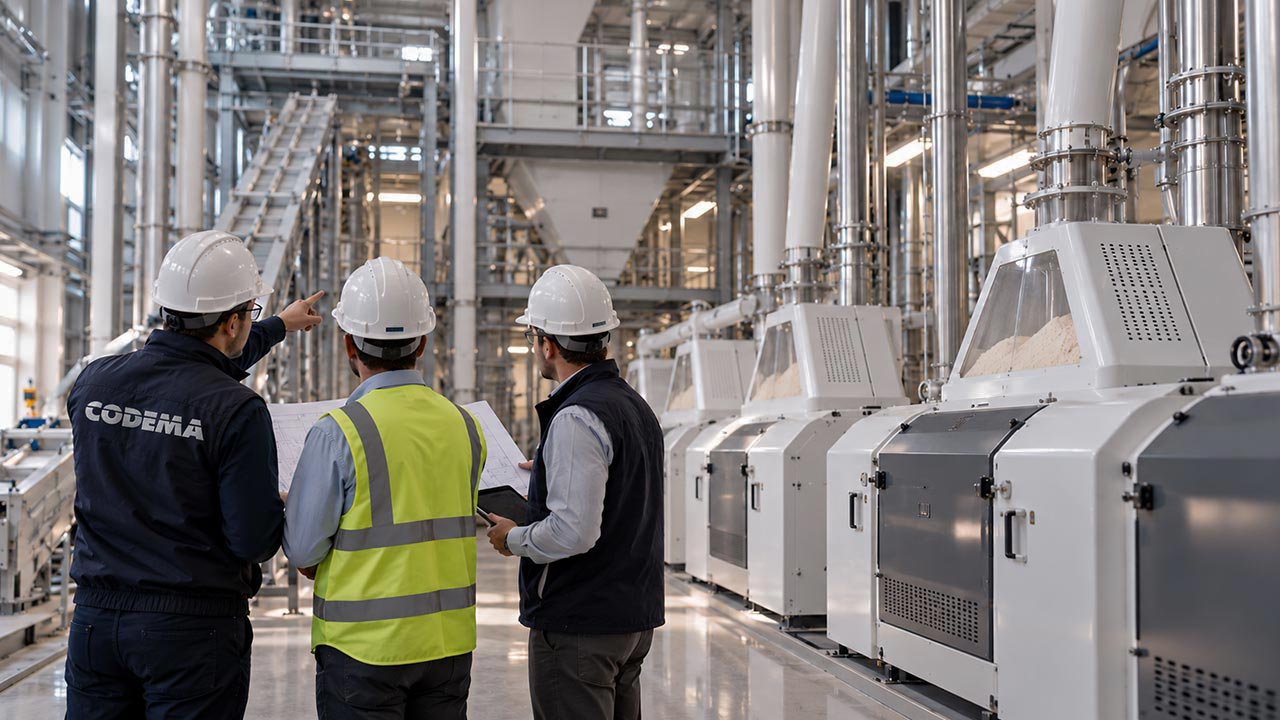
Integrating New Equipment into a Flour Mill
Adding new equipment to a flour mill can create an opportunity to address a production constraint, update an outdated process stage, or prepare a facility for changing operational needs. The equipment itself is only one part of the decision. Its value depends on how it fits the existing process, utilities, building layout, controls, and operating routines. A structured integration plan helps teams evaluate the complete change before committing to a solution.
Define the need before choosing the machine
Begin by documenting the problem to be solved. Is the objective to improve a transfer point, change a process stage, support a different product, replace unreliable equipment, or make maintenance easier? Establishing the operational need helps prevent a project from becoming a machine replacement without a clear performance objective. Where possible, review current operating observations, available drawings, process flows, and constraints with the people who run and maintain the plant.
Map the existing process and interfaces
New equipment must connect to upstream and downstream stages. Check the incoming and outgoing material conditions, physical connection points, required access, available space, and any relevant control or utility interfaces. Existing drawings should be verified against the actual installation, especially where a facility has been modified over time. Material transfer and storage can influence the result just as much as the central process machine, so these interfaces should be included in the review.
Select equipment for the real operating context
Capacity, product characteristics, operating schedule, maintenance access, and compatibility with existing equipment should all inform selection. Supplier information is important, but the final choice also needs to reflect the plant’s specific requirements. Codema’s stated approach includes process analysis, equipment selection, engineering coordination, and the integration of solutions from technology partners when they fit the project needs.
Plan installation and start-up early
Installation constraints can affect shutdown duration, access routes, lifting arrangements, and the sequence of work. The project plan should clarify responsibilities, documentation, required checks, and how the updated process will be evaluated after start-up. Operators and maintenance personnel should understand what has changed and how the new equipment is intended to work within the line. The precise commissioning steps depend on the equipment and project scope.
Conclusion
Successful flour mill equipment integration starts with a clearly defined operational need and a verified understanding of the existing plant. Process mapping, interface checks, suitable equipment selection, and realistic installation planning reduce the risk of treating a connected system as a collection of separate machines. Learn more about Codema’s engineering approach, explore its Alapros milling solutions partnership, or review material handling solutions for related process connections.
